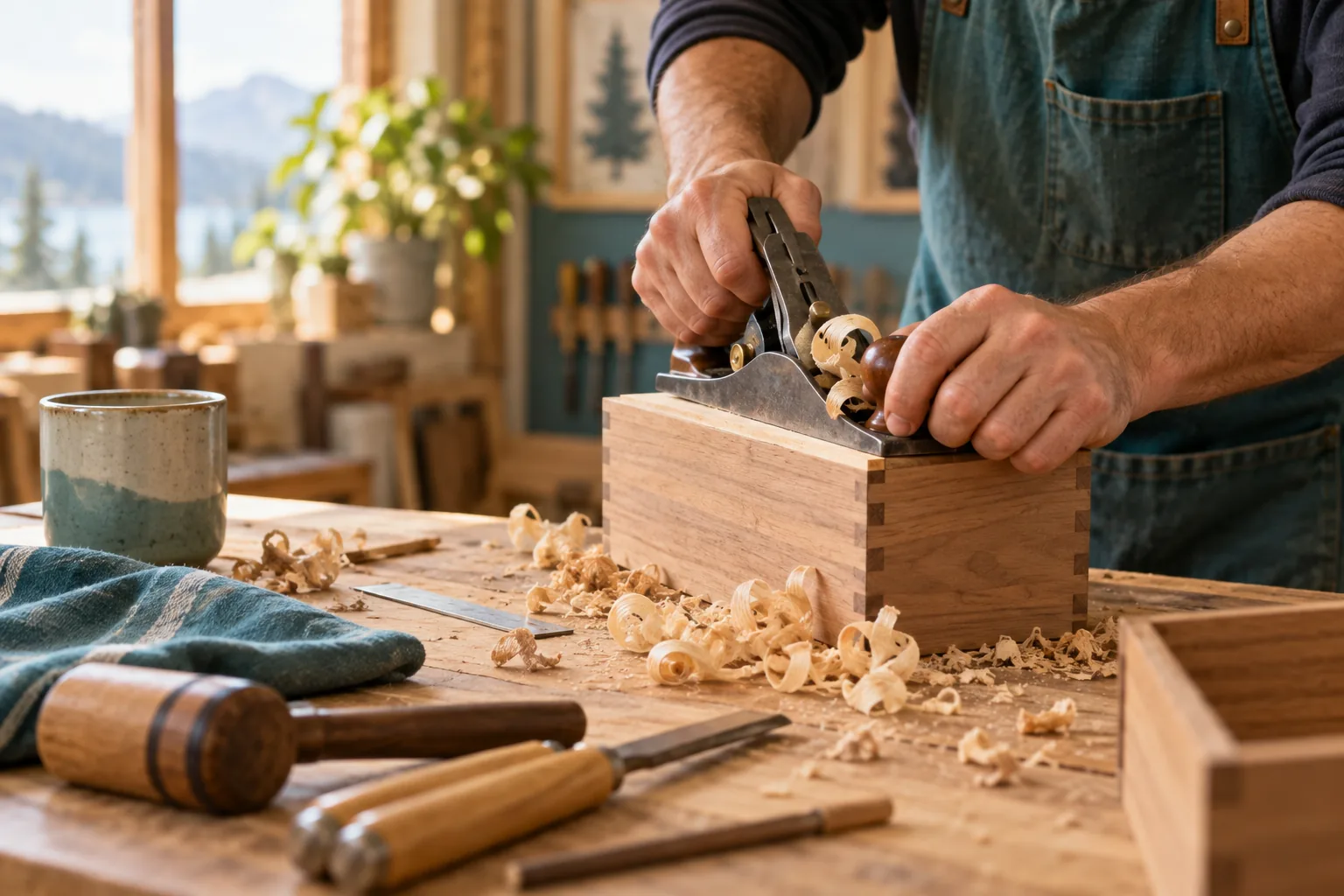
When you look at the price tag for a woodworking class, remember that the registration fee is rarely the full story. To find the true cost, you have to look at what it takes to actually get your project finished. Total expenses include tuition plus the wood, the hardware, the consumables, your own safety gear, and the cost of getting to and from the shop. A quick workshop in Vancouver might seem cheaper on paper than a long course on the North Shore or private lessons in Langley, but once you factor in travel and extra shop time, the math changes.
Start with what the course produces
You have to decide what you are actually paying for: the instruction or the physical item. A class where you build a large piece of furniture will naturally cost more in materials and shop time than a simple technique lesson. A technique lesson might only use practice scraps to teach a skill, whereas a lathe class might focus on a single small piece of wood. You cannot compare a one-day introductory session to a multi-week foundations course just by looking at the sticker price.
Check if you are walking away with a finished object, just the pieces to finish at home, or just the skills you practiced. You should also confirm the total number of instruction hours and whether you can make up any sessions you miss.
Materials can be bundled or separate
It is worth asking for a specific list of what is included, such as timber, hardware, glue, sandpaper, and finishes. Some instructors provide standardized wood for everyone, while others might ask you to pick your own or bring your own stock. Keep in mind that the type and size of the wood affects the price, but beginners should wait for the instructor to provide exact specifications before buying any lumber.
Check if there is a charge for replacement wood if you make a mistake and cut a piece incorrectly. You also need to know if finishing is part of the class. A project that is labeled as "complete" might still require you to do the final sanding or oiling at your own house.
Tools, supervision and class size shape the fee
Running a professional woodshop is expensive because of the cost of machines, dust collection, sharpening, and maintenance. A class with small groups or one-on-one instruction usually provides more direct feedback, which can drive the hourly rate up. For example, Ed's Woodturning provides individual instruction in Langley, whereas The Urban Woodworker operates adult classes across three different Metro Vancouver sites. You should look at the quality of attention you get, not just how many people are in the room.
Find out which tools you will be expected to use yourself. In some classes, the instructor might handle the more difficult, advanced cuts to keep things safe, which might mean you spend less time on the machines even though the lesson is still valuable.
Ongoing access may be a separate cost
If you want to keep woodworking as a hobby, you need to look at the long term. MakerLabs Vancouver treats safety and orientation classes as separate from their project workshops, memberships, or drop-in access. Passing a safety orientation is important, but it does not automatically grant you free access to the shop for future projects.
Ask about the costs for memberships, drop-in sessions, machine time, tool booking, storage, and consumables. If you are at a school that offers courses, ask if you can pay for extra coaching or shop time later on and what the requirements are to do so. Do not assume that a course includes future access unless the instructor explicitly says so.
Travel and project transport matter in BC
The cost of getting to the shop depends on where you live and where the class is. A student living in Burnaby going to East Vancouver has a different budget than someone driving from Abbotsford to Langley or commuting to Lower Lonsdale. You should account for the number of trips, the cost of transit or parking, and whether you need a vehicle to carry your finished project home. A cheaper tuition rate might end up being more expensive overall if the travel costs are high.
Always check the specific venue for the exact course you want before you set your budget.
Use a complete comparison
To find the best value, make a list for every option you are considering. Include the tuition, tax, required materials, any safety gear you need to buy, the cost of trips, and how you will transport your finished work. Add in any extra fees required to reach your specific goal. Once you have those numbers, look at the class size and the number of instruction hours. The best value is the class that gets you the skills you want in a format that actually allows you to finish your project, not just the one with the lowest starting price.