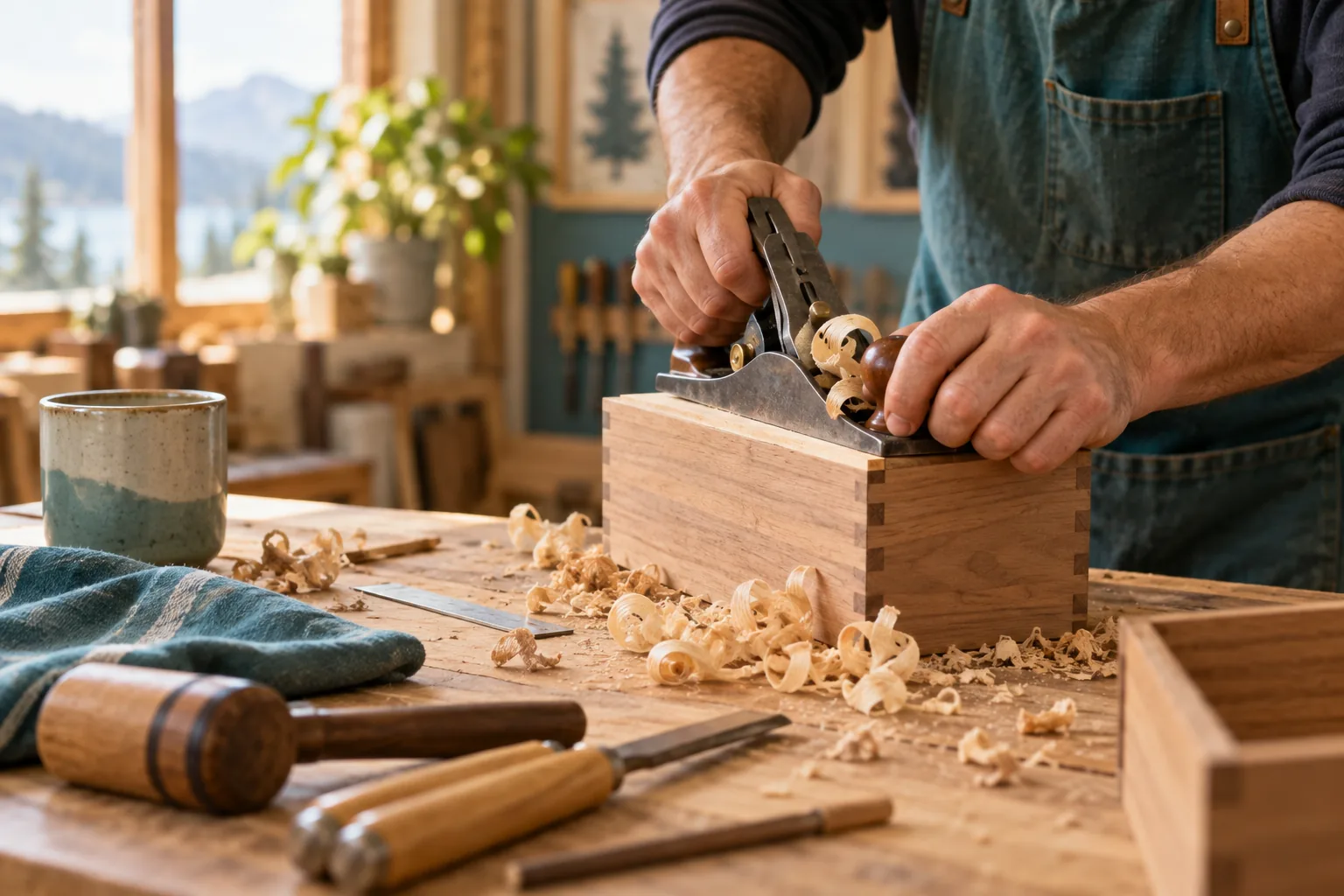
A good first woodworking class should tell you exactly which tools you will use, what instruction is included, and whether the finished project actually fits the time you have available. It is important to distinguish between "workshop access" and a "woodworking lesson." If you need to learn the basics, start with a taught project. If you already know what equipment you need and just want space to work, look into a makerspace.
Compare the actual teaching location
The Urban Woodworker offers teaching locations in Lower Lonsdale in North Vancouver, the Roundhouse in Vancouver's Yaletown, and Clayton in Surrey. You need to check the specific location for the course you want, because a provider operating in three cities does not mean every course is offered at every workshop. Their formats vary from different course lengths to drop-in opportunities, so make sure you compare the format alongside the project itself.
MakerLabs Vancouver combines making facilities with actual classes. Ask which introductory course or equipment orientation applies to the specific work you want to do, and find out if you get any continued access after the class ends. A one-off class fee is not the same thing as an ongoing workshop membership.
Maker Cube, located in Langley, is another makerspace option that offers classes and onboarding. If you live east of Surrey, a local workspace like this is much more practical than transporting heavy materials across the region after a work day. You should use the woodworking directory and makerspace listings as separate starting points for your search.
Pick a manageable first project
Small objects are ideal for beginners because they let you practice measuring, marking, cutting, joining, and finishing without the high material costs or storage headaches of large furniture. Ask to see the actual project you will be making and check how much of it is prepared in advance. Using pre-cut parts can be fine for a first experience, but keep in mind that it is a very different lesson from choosing and preparing rough timber yourself.
If you already have a specific project in mind, describe the dimensions, materials, and joints to the instructor before you book. A general beginner course might not cover a custom cabinet, a specific repair, or complex furniture design. For larger projects, you need to know if the workshop can store the piece between sessions and how you are expected to get it home.
Questions that change the comparison
- Which tools will students use themselves, and which operations are instructor demonstrations?
- What previous experience is required? Is the safety orientation included in the booking?
- Are timber, hardware, glue, abrasives, and finishing materials included in the price?
- How many students share each machine, and how much supervised practice is available?
- What happens if the project is unfinished when the course ends?
Never assume that taking one class gives you the authority to use every machine in a shared shop. Access to certain equipment often requires separate orientation or specific approval. It is better to ask about the exact tools needed for your next project rather than buying a membership only to find out the relevant area is unavailable to you.
Clothing, access and working conditions
Follow the workshop's specific instructions regarding footwear, clothing, hair, and protective equipment. You should ask what eye, hearing, and dust protection is supplied and what you are expected to bring yourself. If things like standing for long periods, grip strength, noise, or dust affect your ability to work, discuss these specific tasks and the room environment in advance. Just because a building has an accessible entrance does not mean every bench or machine is comfortable for everyone to use.
If you are looking for programs for children or teenagers, verify that the program accepts the participant's age and provides appropriate supervision. A general listing for adult woodworking is not proof that they offer classes for children.
Compare a complete learning path
When looking at your first booking, calculate the total cost by adding the class price, required materials, and any compulsory orientation fees. If your ultimate goal is independent practice, ask about membership, storage, and supported shop sessions. A course close to your home that you can actually attend consistently is often more useful than a complicated project that requires a difficult commute. Judge a booking by the actual skills and access it provides.