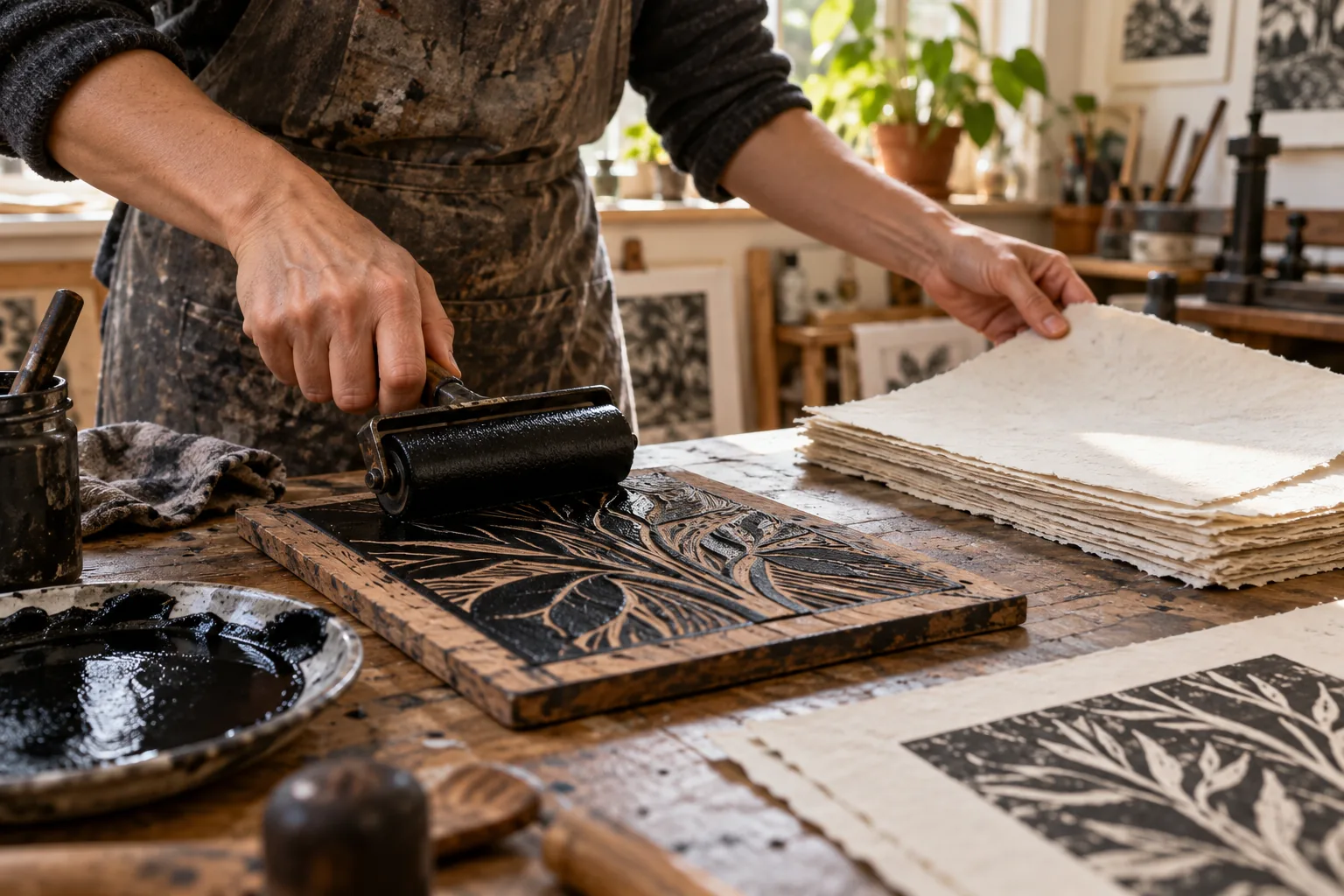
Printmaking classes involve a lot of different physical tasks, like carving a block, preparing a metal plate, or working with a screen. Before you start comparing studios in Vancouver, you should decide which process actually interests you and what level of instruction you need. Keep in mind that a print shop that focuses on producing finished images for clients isn't necessarily a place that teaches the craft.
Vancouver studios to investigate
Dundarave Print Workshop in Vancouver provides both classes and memberships. They list relief and intaglio as part of their activities. You should check the specific technique named in a current course and verify whether you need previous studio experience to join.
Malaspina Printmakers operates from two locations: Granville Island and Howe Street. Make sure you use the specific address for the workshop you want. While older course announcements can give you an idea of what a studio is capable of teaching, they won't tell you if there is an available date you can book right now.
You can browse the printmaking directory to compare different providers. If a listing mentions printing, framing, or sales, double-check that you are signing up for a hands-on class rather than just a production service.
Match the process to your interest
Relief printing is the right choice if you want to carve a design and create multiple impressions. You should ask which block materials and tools are used, and whether the class starts by transferring a design or expects you to show up with artwork already prepared. Intaglio courses use different plate preparation and printing methods, so read the specific course description instead of assuming the materials or facilities are the same as other methods.
If you want to print on fabric, make sure you mention that before booking a workshop designed for paper. Likewise, the process for making an edition of an illustration is quite different from learning how to reproduce a digital photograph. A good rule of thumb is to bring an example of the result you want to achieve so the instructor can tell you which course fits best.
Materials, press time and cleanup
Ask exactly what the fee covers. Does it include paper, plates or blocks, ink, and tool use, or are there extra processing costs? A materials charge might only cover a specific quantity or a certain size of paper. If your goal is to make a set of gifts or an edition, ask how many impressions are realistic to finish in one session and if they have extra paper available.
You also need to know the logistics: how does everyone share the press, how does equipment time work, and what is the cleanup expectation? If you are considering a membership later, ask if the introductory class satisfies the studio's orientation requirements. Attending a class and having unsupervised access (membership) are usually separate arrangements unless the provider says otherwise.
Prepare the right artwork
Before you spend time designing something, ask about dimensions, how many colors are allowed, and whether the printed result will be a reversed image. An instructor might want a physical drawing, a digital file, or they might want you to start from scratch in class. Use your own work or material you have the legal right to reproduce; just because an image is technically easy to print doesn't mean you have the right to sell it as an edition.
Think about how you will get your work home. Wet ink and large sheets of paper require much different handling than a small, dry craft project. If you are traveling from outside Vancouver, confirm whether you need to return on a different day to collect finished prints.
Choosing a first booking
If it is your first time, look for a course with a clearly named technique, a realistic small project, and enough instruction to help you understand the mechanics of the process. If you have experience, tell the instructor what you want to learn next to see if the course will actually advance your skills. A membership is great for independent work, but it is usually best to wait until you understand the studio's equipment, access rules, and support systems.