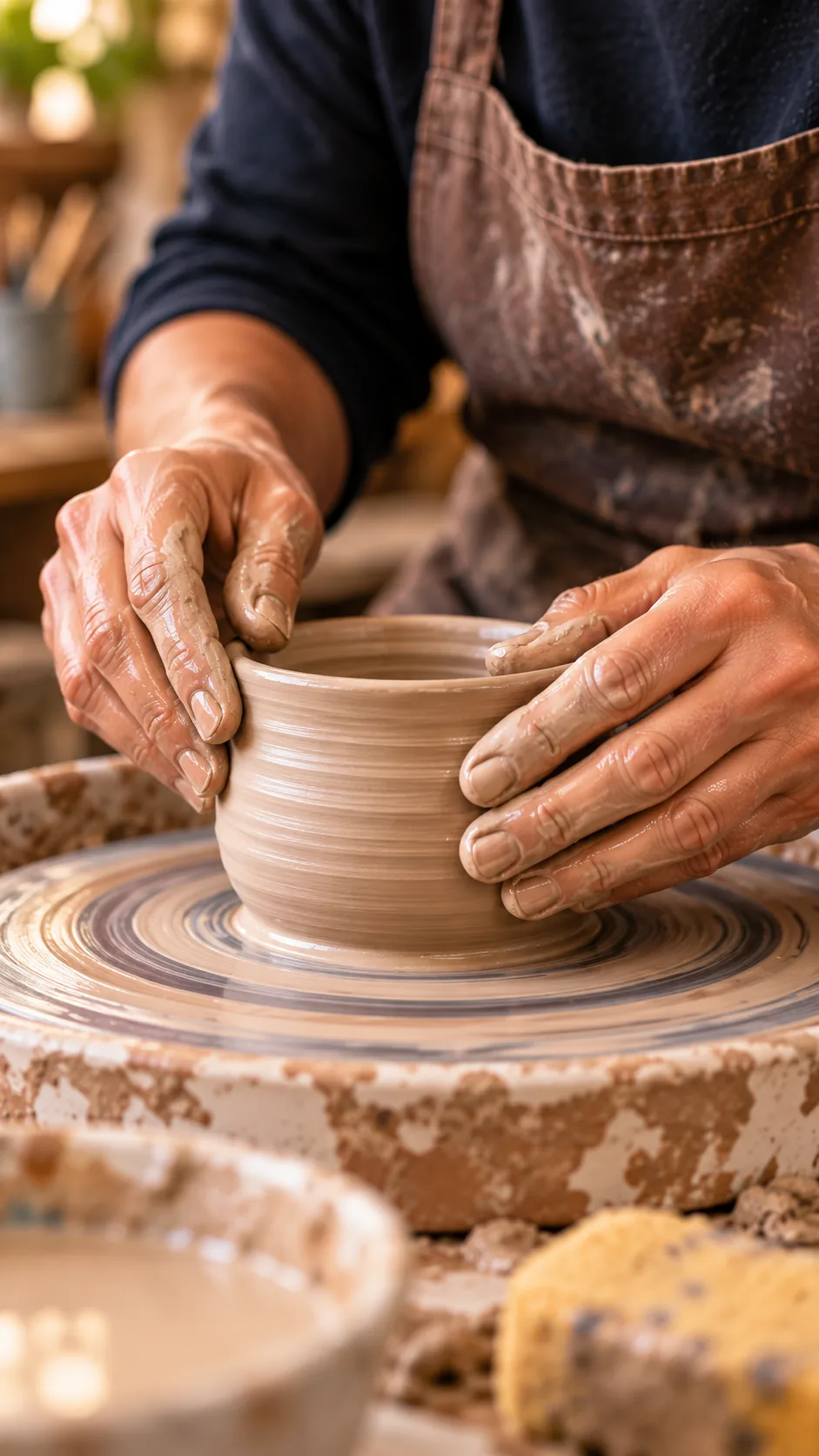
A pottery class is only the visible part of a much longer process. Knowing how these stages work helps prevent confusion.
Before class: identify the actual format
Check exactly what kind of class you booked: wheel throwing, handbuilding, or pottery painting. A wheel lesson involves moving clay with coordinated pressure, while handbuilding uses your hands and simple tools at a table. Pottery painting is different entirely, as you start with a pre-made ceramic blank rather than raw clay. You should also check if you've signed up for a one-day experience or a multi-week course, as the goals are very different.
Confirm the address, start time, age requirements, and the experience level needed. It is worth asking what you should wear and if they provide tools and aprons. Most studios recommend comfortable clothes and practical footwear, but always follow the specific instructions provided for your session.
During class: expect demonstration, practice and limits
Usually, an instructor will show you the steps and then walk around to help you work through them. If you are on the wheel, your first attempts might collapse or end up uneven. If you are handbuilding, your forms might look nothing like the sample. These results are just part of the learning process, not a sign that the class failed.
Ask how many pieces you are allowed to make and how many the studio will actually keep for firing. Spending time shaping a piece doesn't guarantee it will become a finished object. In a project workshop, the class usually follows one specific design, whereas a technique course might have you repeating a small set of actions over and over.
If you have needs regarding setup or pace, speak up before you start working. Confirm things like seating, wheel controls, breaks, and how to ask for help. A studio can only help you if they know what you need.
After making: wet clay cannot simply go home
The piece has to dry gradually. If you've done wheel-thrown work, it might need trimming once it reaches a certain firmness. Depending on your class, you might return for the later stages, select a finish for the staff to apply, or just receive a standard studio finish.
Keep in mind that clay shrinks, and pieces can warp or crack. Glaze can also look quite different once it's actually fired. Ask your provider how they handle pieces that don't survive the kiln and whether your fee covers just the instruction or the full processing and firing as well.
Local formats illustrate the differences
Dodream Ceramic Studio in New Westminster offers a one-day beginner cup-and-bowl experience alongside longer wheel studies. Check what the studio completes for you under each format.
Cafe au Clay Studios in Vancouver offers a variety of options including wheel classes, handbuilding, workshops, private bookings, and drop-in pottery painting. They also have specific information about pottery pickup, which is a separate step you'll need to manage.
Stablehands Pottery provides wheel instruction in Abbotsford. Their site mentions that handbuilding classes aren't currently offered, so make sure a wheel class is what you're actually looking for.
Collection completes the class
Before you leave the studio, find out how your work is labelled and how they will contact you when it's ready. Confirm the pickup window, the address, the hours, and the final date they will hold your piece. You should also ask if someone else is allowed to collect it for you.
Once you get your piece, inspect it and follow the studio's care instructions. If you intend to use it for food or drink, don't just assume any ceramic item is food-safe; ask the provider about the specific materials and finishes they use.
Set a realistic first goal
A good first class should teach you what the clay feels like, how a specific method works, and whether you actually enjoy the process. The finished object is just a record of that learning, not a factory-perfect product. You can compare different formats through the pottery directory and area pages to find a class where you understand the entire workflow.