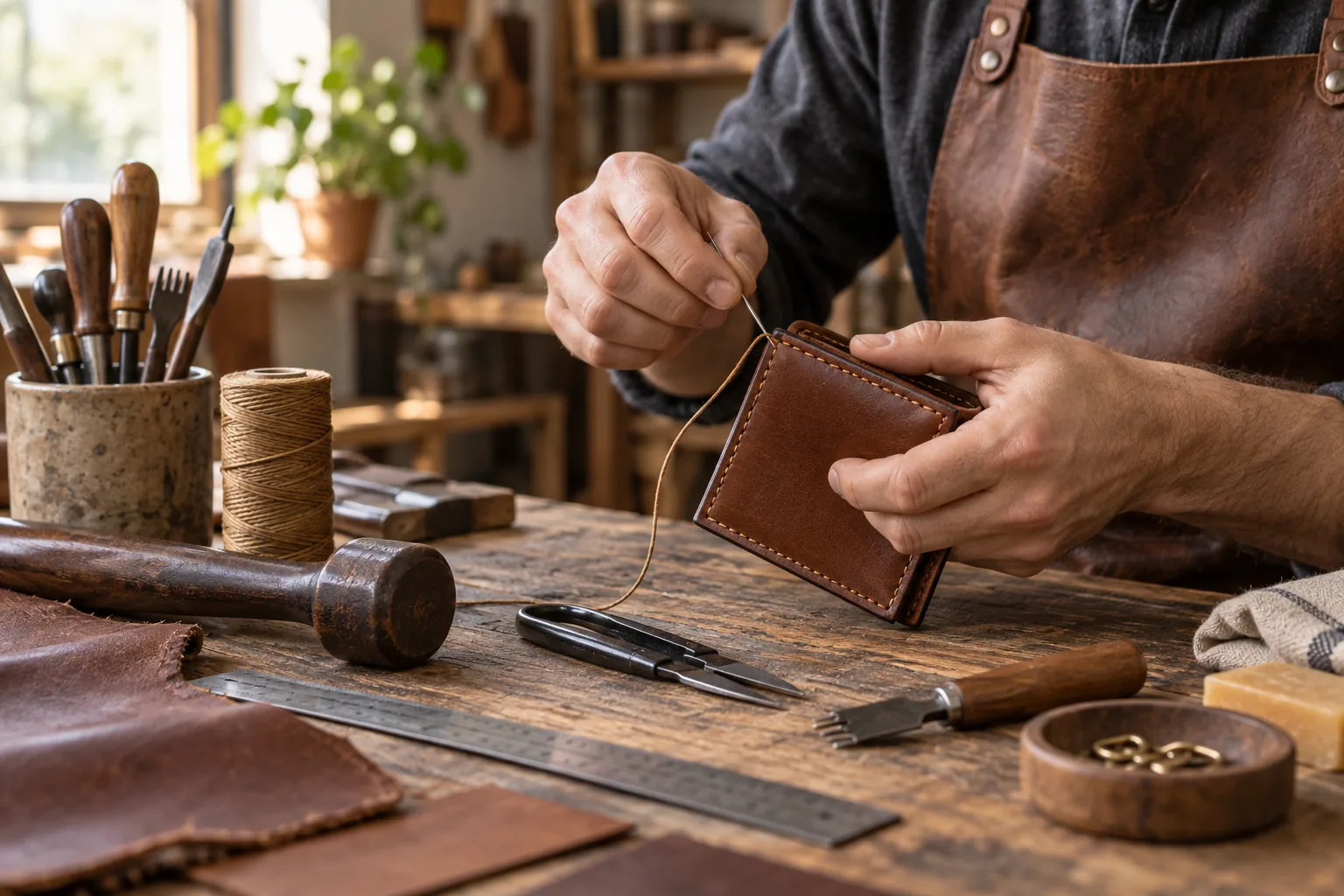
A leatherwork workshop can range from a quick introduction using pre-cut pieces to a full course covering cutting, assembly, stitching, and finishing. Before you book, decide if you want a social experience, a finished object you can actually use, or the specific skills needed to work at home. Keep in mind that a photo of a finished project can represent very different levels of student work depending on how much preparation the instructor has done.
Two Vancouver providers to compare
Lonsdale Leather provides leatherwork supplies and workshops. Their current shop is located in Mount Pleasant, Vancouver. Do not use the business name or its North Vancouver history to identify the class location; always confirm the specific address and room when you book a workshop.
Awl Together Leather offers workshops alongside their repair and custom services in Vancouver. When inquiring about a class, make sure you distinguish between learning to make an object yourself and commissioning or repairing one. The equipment and time allocated for a taught workshop might not be suitable for a personal repair project.
Use the leatherwork directory to compare different providers. Look for a current, clearly described workshop. Just because a shop sells leather and tools does not mean they have a specific class currently scheduled.
What will you learn yourself?
Ask which parts of the project arrive pre-cut or prepared, which tools you will be using, and whether the class covers hand stitching, machine sewing, or another assembly method. Using prepared parts makes a short introduction much more manageable. However, if your goal is to become an independent maker, you should look for instruction that includes planning, cutting, and finishing.
For projects like a wallet, belt, or pouch, decide on your design choices before you book. Your choice of size, hardware, and leather can change both the final result and the total cost. Don't assume a sample made from a different material will be available during your session.
Compare the complete cost
Check if the workshop fee includes the leather, thread, hardware, tool use, and finishing materials. Ask if upgrades are optional or if they are necessary to complete the advertised project. A retail price for leather listed on a website is not the same thing as a class fee.
If you plan to continue leatherworking at home, ask which tools are essential for that specific technique. You shouldn't assume that every specialist tool in a professional shop belongs on a beginner's shopping list. A class is a good way to figure out which parts of the process you actually enjoy before you spend money on your own equipment.
Fit, handling and access
If you are making something to be worn, ask what measurements are required and whether you can make adjustments during or after the session. If you are making a gift, find out if the recipient needs to be present for fitting or if they need to choose components in advance.
Discuss any concerns regarding grip, repeated hand movements, or prolonged standing or seated work. Instead of relying on a general accessibility label, ask about the actual workbench, the tools, and the room itself. Always follow the instructor's specific instructions regarding handling and clothing for the equipment in your class.
Booking a group or a longer course
If you are booking for a group, ask if everyone makes the same item, how many people will be sharing equipment, and if the instructor can accommodate different experience levels. Make sure you understand the cancellation terms and any minimum charges. For longer courses, check the available practice time, storage options, and what happens if a project isn't finished by the final session.
The best first booking is one that makes the process clear: what you will do yourself, what materials you get, what you take home, and which skill you can practice next.